
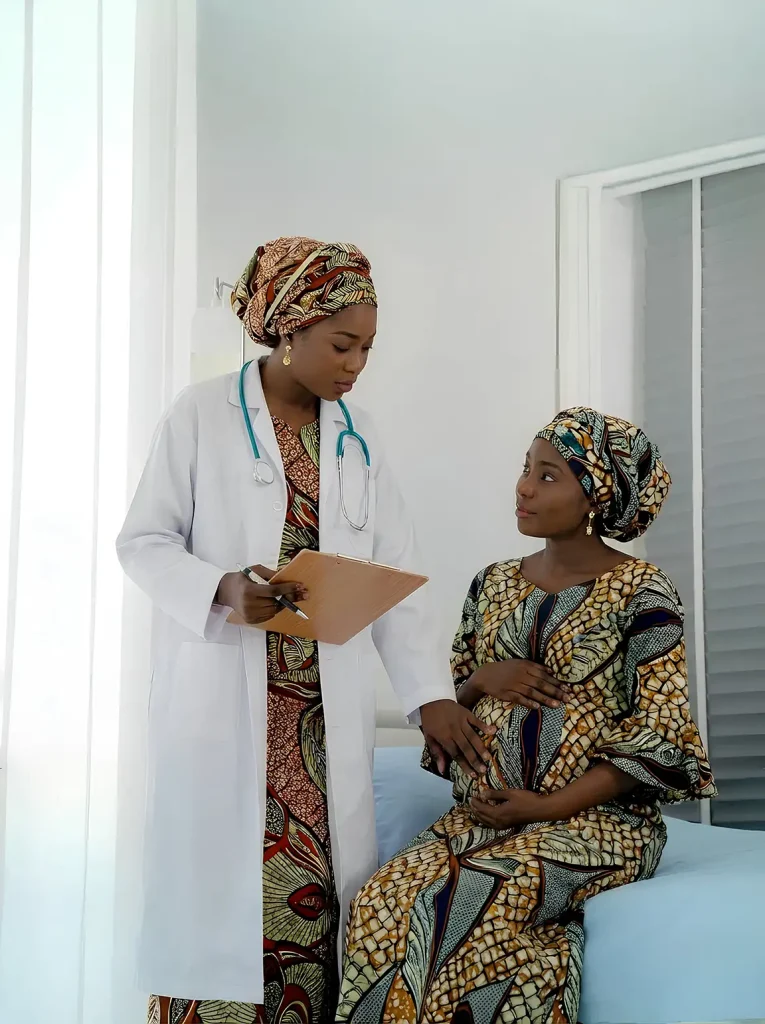
When Maria arrived at the primary health center in labor, bleeding heavily, the midwife on duty didn’t panic. Instead, she quickly assessed the situation, applied what she’d practiced just weeks earlier during a hands-on training session, and took decisive action that saved both mother and baby.
This is the kind of outcome that drives the work happening right now across Kano State, where a groundbreaking 13-day refresher training is transforming how healthcare workers respond to life-threatening complications during childbirth.
The Stakes Are High
Nigeria accounts for nearly 20% of global maternal deaths, with an estimated 82,000 maternal deaths annually. In northern Nigeria, including Kano State, the numbers are even more sobering. For every 100,000 live births, hundreds of women lose their lives to complications that are, in most cases, preventable.
Behind these statistics are real women, mothers, daughters, sisters, whose lives depend on the skills and readiness of healthcare workers in critical moments.
A Different Kind of Training
In December 2025, something remarkable took shape in Kano State. The National Primary Health Care Development Agency (NPHCDA), with technical support from WCAHealth Options, launched an intensive refresher training program under the Advancing Emergency and Routine Immunization (AEARI) Programme. But this wasn’t your typical classroom-based training with PowerPoint slides and lectures.
The focus was clear: when a woman is bleeding out after delivery, her midwife needs more than theoretical knowledge. She needs muscle memory, confidence, and practical experience even if gained through simulation.
“Our latest financial report highlights Execor’s strong growth, innovation, and commitment to delivering value. We remain focused on sustainable success and excellence."
John Smith, CEO & Owner Tweet
Hands in the Game, Lives on the Line
The training centered on Skilled Birth Attendance (SBA), the critical competencies that healthcare workers need to safely manage pregnancy, childbirth, and the immediate postpartum period. The approach was intensely practical: hands-on simulations using anatomical models, real medical equipment, and scenario-based practice.
Participants didn’t just learn about managing postpartum hemorrhage, they actually practiced it. They worked with calibrated drapes (simple tools that help accurately measure blood loss), learned to apply the E-MOTIVE bundle (a WHO-endorsed package of interventions for treating postpartum hemorrhage), and ran through emergency scenarios until their responses became second nature.
The philosophy was straightforward: the first time a healthcare worker uses a calibrated drape or implements the E-MOTIVE protocol shouldn’t be during a real emergency. Simulation creates a safe space to build competence before lives hang in the balance.
More Than Just Skills
What made this training particularly powerful was its integration of multiple evidence-based tools and approaches:
- E-MOTIVE bundle implementation: A systematic approach to early detection and treatment of postpartum hemorrhage that has been shown to reduce severe bleeding by 60%
- Calibrated drapes: Simple, low-cost tools that help healthcare workers accurately measure blood loss, turning a subjective guess into objective data that triggers timely intervention
- Active Management of Third Stage of Labor (AMTSL): Proven techniques that prevent hemorrhage before it starts
- Emergency obstetric care simulations: Real-time practice managing complications like eclampsia, obstructed labor, and severe bleeding
A Collaboration That Works
This wasn’t a solo effort. The training brought together a powerful coalition of partners, each bringing unique strengths:
- NPHCDA provided national coordination and policy alignment
- Kano State Primary Health Care Management Board (KNSPHCMB) ensured local ownership and sustainability
- TAConnect and the Gates Foundation supported through the AEARI Programme
- WHO contributed technical guidelines and quality standards
- Global Gas and Health Network (GGHN) supported infrastructure improvements
- WCAHealth Options delivered technical facilitation, curriculum adaptation, and hands-on training delivery
Partnership in this context means more than coordination, it represents a shared commitment to systemic change, from policymakers to frontline workers.
What Happens Next?
The 13-day training is just the beginning. The real test comes in the weeks and months ahead, as trained healthcare workers return to their facilities and put their new skills into practice.
But early indicators are promising. Post-training assessments showed dramatic improvements in participants’ confidence and competence. More importantly, the simulation-based approach means these aren’t just theoretical improvements, they’re practical skills that healthcare workers can deploy immediately.
WCAHealth Options is now working with KNSPHCMB to establish ongoing mentorship and supportive supervision systems, ensuring that the momentum from training translates into sustained practice change. The team is also tracking key indicators like the adoption rate of calibrated drapes and E-MOTIVE bundle protocols across facilities.
Why This Matters Beyond Kano
What’s happening in Kano offers a blueprint for maternal health workforce strengthening across Nigeria and beyond. The model demonstrates that:
- Hands-on simulation works: Healthcare workers need to practice emergency procedures in low-pressure environments before facing real emergencies
- Simple tools save lives: Low-cost innovations like calibrated drapes can dramatically improve outcomes without requiring expensive equipment
- Local leadership matters: Nigerian-led organizations like WCAHealth Options bring deep contextual understanding and sustainable relationships
- Integration is key: Combining multiple evidence-based interventions (E-MOTIVE, AMTSL, skilled attendance) creates synergistic effects
A Vision for the Future
WCAHealth Options envisions a Nigeria where no woman dies giving life. It’s an ambitious goal, but one that feels increasingly achievable as programs like this Kano training demonstrate what’s possible.
Every maternal death represents both a tragedy and a missed opportunity, an opportunity to intervene, to save a life, to keep a family intact. The mission is to ensure healthcare workers have every tool, every skill, and every ounce of confidence they need to seize that opportunity when it arrives.
As the trained healthcare workers fan out across Kano State’s health facilities, they carry with them more than certificates and new knowledge. They carry the potential to rewrite the story of maternal health in northern Nigeria, one safe delivery at a time.
Eager to see how these changes will elevate performance standards and user satisfaction!
Comments are closed.